


When: October 14–16, 2026
Where: Multiple locations (see agenda)
Registration: The summit is now at capacity.
The K-12 Sustainability Summit, hosted by the Penn State Outreach and Penn State Sustainability, brings together the K-12 and Penn State communities to collaborate on new pathways for advancing sustainability education across Pennsylvania.
This two-day event convenes a select group of educators and school leaders from across the commonwealth to explore how sustainability can be integrated into K-12 learning environments. Through interactive sessions, campus experiences, and conversations with Penn State experts and fellow educators, participants will explore practical strategies, build meaningful partnerships, and develop ideas they can take back to their schools and communities.
If you’re interested in collaborating on other K-12 and sustainability-focused initiatives, please contact with us at k12outreach@psu.edu.
Wednesday, October 14
Location: Graduate by Hilton State College (125 S Atherton Street, State College, PA 16801)
| Time | Event |
|---|---|
|
3:00–4:30 p.m. |
Welcome KnowledgeWorks: Envisioning the Future of Learning Through the Lens of Sustainability |
|
4:30–5:00 p.m. |
Setting the Stage for Environmental Literacy and Sustainability Planning Explore connections between national, commonwealth-wide, and regional PA Environmental Literacy (Elit) initiatives, including work connecting the PA STEELS (Science, Technology & Engineering, and Environmental Literacy & Sustainability Planning), PA Elit Network, PA Pathways to Green Schools, and District and Building Environmental Literacy Planning. |
|
5:00–6:00 p.m. |
Optional: Social hour |
Thursday, October 15
Location: Brass 16823 (2042 Axemann Road, Bellefonte, PA 16823)
Breakfast and lunch provided. Transportation provided to and from Brass 16823.
| Time | Event |
|---|---|
|
8:30–9:15 a.m. |
Introductions and Breakfast |
|
9:15 a.m.–10:45 p.m. |
Grow and Go Sessions |
|
11:00 a.m.–12:15 p.m. |
Developing and Designing Spaces for Youth to Empower Themselves and Others In this session, we will unpack what it takes to engage and sustain youth in youth participatory action research programs. Together, we will explore the needs of both K-12 youth and adult educators to ensure the goals of any project are providing opportunities for empowerment through educative action. Utilizing a critical youth studies design framework, the intentionality, methodological design, and challenges of critically working with K-12 youth will offer participants a path forward for them to be and/or to continue to be co-leaders with youth. |
|
12:15–1:15 p.m. |
Lunch and Keynote Speaker |
|
1:30–5:00 p.m. |
Sustainability at Penn State Tours We’ll be exploring sites and units at Penn State that can offer educational opportunities for your students or examples of sustainable operations and living labs that you might be able to adapt for your campuses. Participants will be assigned to one of two different field trips, with destinations scheduled to include (subject to change): the Sustainability Experience Center, Ross Student Farm, Penn State Golf Course, Chapel Woods, and the Berkey Creamery. |
Friday, October 16
Location: Shaver’s Creek Environmental Center (3400 Discovery Rd, Petersburg, PA 16669)
Breakfast and lunch provided. Attendees are responsible for transportation to and from Shaver’s Creek.
| Time | Event |
|---|---|
|
8:30–8:45 a.m. |
Welcome |
|
8:45–11:00 a.m. |
3×5 Presentations: By K-12 for K-12 These are fast-paced, peer-to-peer presentations: 3 minutes, 5 slides, and a strict time limit. Each school, district, or IU will share one quick story, lesson learned, or best practice related to sustainability in education or operations. Topics might include engaging the community, empowering students, gaining administrative buy-in, transforming operations, or scaling successes. Keep it short, helpful, and fun—a bite-sized idea your peers can take home. |
|
11:00–11:15 a.m. |
Introduction to Local Climate Action Program (LCAP) with Prepare PA Fellows |
|
11:15 a.m.–12:45 p.m. |
Lunch and Explore Shaver’s Creek |
|
12:45–2:00 p.m. |
Put Your Money Where Your Need Is: Effective Environmental Education Grants for the Classroom and Community Grant writers of all levels will learn to develop ideas into competitive proposals, identify and secure eligible match, maximize and build resources and partnerships, effectively reach the target audience, and confidently and concisely demonstrate project impact and outcomes. |
|
2:15–4:00 p.m. |
KnowledgeWorks Workshop |
Meaningful Watershed Educational Experiences (MWEEs)
Led by: Tamara Peffer, Michelle Niedermeier
Water You Waiting For? Join us for a fast-paced, hands-on introduction to Meaningful Watershed Educational Experiences (MWEEs). During this session, we’ll explore how MWEE components are woven into the PA STEELS standards and practice efficient strategies for developing lines of inquiry. Participants will learn to identify watershed-related phenomena and craft driving questions that ignite student curiosity. This session models instructional approaches that elevate youth voice and support learner-driven investigation—core elements of both MWEEs and STEELS. You’ll leave with practical strategies and ready-to-use resources for integrating watershed-focused environmental literacy and sustainability learning into your own classrooms and programs.
Light Pollution as a Negative Impact on the Environment, Human Health, and Ecosystems
Led by: Chris Palma, Julia Plummer
Light pollution is more than an obstacle for stargazers—it has measurable consequences for wildlife, ecosystems, and human health. In this workshop, we explore light pollution through an astronomy education lens, examining both the science behind its impacts and its growing relevance across disciplines. Participants will then shift from awareness to action, learning how students can investigate light pollution in their own communities. Activities include learning to conduct a dark sky assessment, exploring mitigation strategies, and connecting with Pennsylvania organizations and individuals working toward darker skies—potential community partners for meaningful, locally grounded student projects.
Cultivating Partnerships Between Schools and Nature Centers
Led by: Alexa Sarussi
In this session, explore how establishing a partnership with a nearby nature center can enrich your school’s curriculum and provide students with opportunities to learn outdoors at school and in your community. Alexa Sarussi, school programs director at Shaver’s Creek Environmental Center, will share how Shaver’s Creek developed two distinct partnership models to engage with two districts at different scales. Together we’ll delve into the details of the two models, discuss pitfalls and tips for cultivating partnerships between schools and nature centers, and utilize an online tool to locate potential partners near you.
Growing Partnerships: Connecting Urban Agriculture, Schools, and Sustainability Education
Led by: Robin Perry-Smith
How can educators transform nearby urban farms into living classrooms for sustainability and science learning? This interactive session shares practical strategies from the partnership between Penn State Extension, Harrisburg School District, and The Hill Farm. Participants will explore how to build community partnerships, connect urban agriculture experiences to Pennsylvania STEELS Standards, and design meaningful farm-based learning. Using the pilot 2nd- and 4th-grade Hill Farm curriculum, participants will examine a three-session model—Meet the Plants, Grow and Harvest, and Field to Food—and leave with actionable ideas for integrating local farms into K-12 sustainability education.
Grant Writing Programs Through Penn State Extension
Led by: Neal Fogle
Learn how Penn State Extension supports individuals, communities, and organizations through grant writing education and resources. This session will provide an overview of Extension’s grant writing programs, including in-person workshops, live webinars, and a self-paced online course. Participants will discover tools and training opportunities to strengthen their grant seeking efforts and increase funding success.
 Christina Grozinger, Ph.D.
Publius Vergilius Maro Professor of Entomology
Director, Huck Institutes of the Life Sciences
Christina Grozinger is the Publius Vergilius Maro Professor of Entomology, director of the Huck Institutes of the Life Sciences, and founding director for the Center for Pollinator Research and Insect Biodiversity Center at Penn State. Grozinger is a fellow of the Entomological Society of America and the American Association for the Advancement of Science. She was awarded the 2021 National Academy of Sciences Prize in Food and Agriculture Sciences and 2023 Penn State President’s Award for Excellence in Academic Integration. Grozinger earned a bachelor’s degree in chemistry and biology from McGill University followed by an M.S. and a Ph.D. in chemistry and chemical biology from Harvard University and was a Beckman Institute Fellow at the University of Illinois, Urbana-Champaign.
Peter Boger, Ph.D.
K-12 Sustainability Summit Co-LeadDirector for Engagement, Penn State Sustainability
Peter Boger is the director for engagement for Penn State Sustainability and co-leader of Sustain Penn State, where he connects university sustainability initiatives with community and campus partners across the commonwealth. He oversees communications, public programming, and lifelong learning initiatives, including the K-12 Sustainability Summit and the Sustainability Coordinator Non-Credit Certificate. He holds a Ph.D. in environmental studies from the University of Wisconsin–Madison and previously directed the Tales from Planet Earth environmental film festival.
Aikumis Serikbayeva
K-12 Sustainability Summit Co-Lead
Graduate Assistant and Ph.D. Candidate in Workforce Education and Development, Penn State College of Education
Aikumis Serikbayeva is a graduate assistant and Ph.D. student in workforce education and development at Penn State, specializing in human resource development, organizational change, and leadership competencies. With a background in petroleum engineering and extensive experience in higher education in Kazakhstan, she has served as a faculty member, administrator, and researcher, leading curriculum initiatives, mentoring students, and advancing workforce development programs. Her research interests include faculty retention, sustainability in education, and global collaboration to expand access to educational opportunities.
Amanda Smith, M.Ed.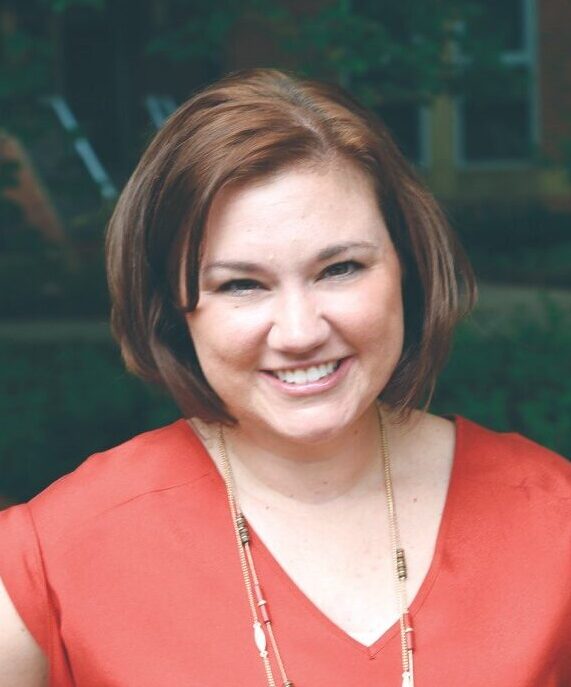
K-12 Sustainability Summit Co-Lead
Director of K-12 Strategy and Partnerships, Penn State Outreach
Amanda J. Smith, M.Ed., is director of K-12 strategy and partnerships at Penn State, focusing on pathways to support K-12 schools and communities. She has more than 15 years of experience in STEM workforce development, cross-sector partnerships, and program implementation, including launching initiatives like the Chief Science Officers program and STEM workforce summits in central Pennsylvania. Amanda previously served as STEM outreach liaison for CSATS and taught biology and independent science research in Loudoun County, VA.
Peter Buck, Ph.D.
Director for Education, Penn State Sustainability
Co-Director, Local Climate Action Program
Peter Buck is co-director of Penn State’s Local Climate Action Program (LCAP), a statewide partnership supporting climate planning and workforce development. His work has been recognized with the Ryan Moser Reilly Institutional Leadership Award and by the Pennsylvania State House of Representatives. A published author, speaker, and sustainability leader, Buck has also served in elected and appointed positions at multiple levels of government.
Caroline Ettinger-DeLong
Community Outreach Specialist, Student Farm and Food Systems, Penn State
Caroline leads educational and wellness workshops and events, works closely with student leaders and community partners, and facilitates volunteers, produce donations, and tours. Her research interests include food insecurity and environmental justice. She earned her B.A. in environmental studies from Skidmore College.
Neal Fogle
Economic and Community Development Educator, Penn State Extension
Neal Fogle is an economic and community development educator with Penn State Extension. He is based in Northumberland County and has been with Extension for twenty-five years. In his prior work, he was the Columbia County planning director after serving as land use planner. Neal has a B.A. in geo-environmental studies from Shippensburg University and a master’s degree in economic and community development from Penn State. In his work with Extension, he conducts educational programs focusing on community planning, land use, organizational strategic planning, grant writing, community visioning, and local government.
Derek Kalp, RLA, ASLA, AULA, CEFP
University Landscape Architect, Penn State
Derek Kalp is a registered landscape architect (RLA) in State College, Pennsylvania, working for Penn State’s Campus Planning and Design division for over 26 years, and he now serves as the University landscape architect. He also leads a private practice focused primarily on site master planning and residential design, with a focus on ecological planting design.
Ricardo Martinez, Ph.D.
Associate Professor, Penn State College of Education
Ricardo Martinez is an associate professor at Penn State in the department of curriculum and education, where he works to create ontological playgrounds of liberation—spaces where youth, teachers, community members, and faculty can empower themselves. His interdisciplinary research is situated in critical youth studies and becomes whatever the youth want and need the research to be. He has facilitated multiple Youth Participatory Action Research projects across the country and has helped dozens of others to develop their own critical youth engagements. As a poet, Ricardo is passionate about exploring poetry as a qualitative method and works to highlight poetry as a praxis to enhance teaching and learning.
Mindy Musser
Director of Environmental Education, Pennsylvania Department of Environmental Protection
Mindy Musser is the director of environmental education for the Pennsylvania Department of Environmental Protection. With nearly ten years of professional experience in environmental education and conservation, Mindy has successfully written, scored, and administered competitive grants exceeding $1 million for nonprofit organizations and state and county government agencies. Mindy enthusiastically shares tips to encourage people with all levels of grant writing and programming experience to creatively and confidently design sustainable environmental education projects and activities. In her free time, Mindy raises a backyard flock, travels, and loudly sings off-key in her Ford Bronco.
Michelle Niedermeier
Education Lead, Pennsylvania Sea Grant College Program
Michelle Niedermeier is the Education Lead for the Pennsylvania Sea Grant College Program, developing youth and adult programs on watershed and environmental literacy. She previously spent over two decades coordinating Penn State’s Community IPM and Environmental Health Program, promoting non-toxic pest management practices. Niedermeier holds a B.Ed. from The University of Toledo and an M.S. in fisheries & wildlife from Michigan State University.
Chris Palma, Ph.D.
Teaching Professor, Department of Astronomy and Astrophysics, Penn State Eberly College of Science
Chris Palma is a teaching professor and the associate department head for outreach in the Department of Astronomy and Astrophysics at Penn State’s University Park campus. His research interests include measuring sky brightness and light pollution in Central Pennsylvania and beyond, and he has documented the sky brightness over Penn State’s campus for more than 10 years. In his outreach role, Chris manages the planetarium at Penn State, and he has created and taught teacher professional development workshops in astronomy for 25 years. He has taught many different courses in astronomy at Penn State, which include a new course on preserving dark skies, and a co-taught course for pre-service elementary teachers.
Tamara E. Peffer, M.S.
Environmental Literacy and Sustainability Content Advisor, Pennsylvania Department of Education
Execute Director, Pennsylvania Advisory Council on Environmental Education
Tamara Peffer, M.S., currently serves as the environmental literacy and sustainability content advisor for the Pennsylvania Department of Education and executive director of the Pennsylvania Advisory Council on Environmental Education. Tamara began her environmental education career in 1994 at Nolde Forest Environmental Education Center. She also served as the first communications liaison for the PA Bureau of State Parks from 2013 to 2019. Concurrently, Tamara taught environmental studies, environmental science, biology, and social science and technology at the Reading Area Community College as an adjunct faculty member. Tamara holds an M.S. in the science of instruction from Drexel University and an M.S. in teaching, learning, & technology from Lehigh University. She also holds Pennsylvania teaching certifications in environmental education, biology, general science, and instructional technology.
Robin Perry-Smith, MHA
Urban Extension Educator, Food-Families-Communities, Penn State Extension, Dauphin County
Robin Perry-Smith is an extension educator with Penn State Extension and a public health professional with more than 20 years of experience in cross-sector partnerships, program implementation, and community engagement. Her work advances strategic initiatives in urban engagement, agriculture, food systems, youth development, and community health. Robin builds partnerships among schools, communities, universities, government, and nonprofit organizations to address complex needs and create sustainable community programs. She serves as Penn State Extension’s urban coordinator for the National Urban Extension Leaders (NUEL), contributing to national and Northeast regional leadership. Her current work includes Penn State Extension, Harrisburg School District, and The Hill Farm partnership, expanding farm-to-school education and connecting hands-on agricultural learning with Pennsylvania STEELS standards.
Julia Plummer, Ph.D.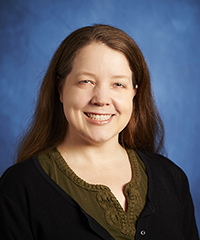
Interim Associate Dean of Undergraduate Education, Professor of Education, Penn State College of Education
Julia Plummer is professor of science education and interim associate dean of undergraduate education for Penn State’s College of Education. Her research interests include understanding the design of learning environments that support spatial thinking and use of science practices; how narratives facilitate science learning; and methods that promote youth and families in taking actions to address issues in their communities, such as light pollution. She spent 12 years as a planetarium educator and currently serves as research editor for the Planetarian, journal of the International Planetarium Society. At Penn State, she teaches courses for pre-service elementary teachers (astronomy and elementary science methods) and for in-service teachers (curriculum and research design).
Leslie Pillen
Director, Student Farm and Food Systems, Penn State
Leslie works with a dynamic group of students, faculty, staff, and community partners to learn about and engage across the food system. The program provides hands-on learning and leadership opportunities for students and community through the Dr. Keiko Miwa Ross Student Farm, food literacy programs, community partnerships, a Food Systems minor, Student Farm Club, and Food Recovery Network. The program cumulatively activates approximately 100 student leaders and 50,000 pounds of food annually, reaching more than 8,000 participants.
 Joshua Potter
Associate Director of Operations, Shaver’s Creek Environmental Center
Joshua works to tell the story of Shaver’s Creek Environmental Center and help maintain a vibrant educational facility to support a wide range of credit, noncredit, outreach, and research programming. He is responsible for developing interpretive materials throughout the facility to support Shaver’s Creek’s educational mission and for managing capital improvement projects to support its programs. He also supports the bookstore, program registration, and membership programs. Joshua received his degree in integrative arts from Penn State, focusing on multimedia and environmental education. After seven years working as a naturalist and outreach coordinator for Tin Mountain Conservation Center in Conway, New Hampshire, he returned to his native Pennsylvania to join Shaver’s Creek in 2010. He grew up just over the mountain in Pine Grove Mills and has a long association with Shaver’s Creek—as a summer camper from ages 5 to 18, as a volunteer in high school, as a student and teaching assistant while at Penn State, and now over sixteen years as staff! Joshua also enjoys birding, hiking, and spending time outdoors with his wife, Sarah, son, Ellory, and daughter, Lucy.
Alexa Sarussi
School Programs Director, Shaver’s Creek Environmental Center
Alexa Sarussi is the school programs director at Shaver’s Creek Environmental Center at Penn State. She coordinates Shaver’s Creek’s partnerships with local school districts and leads a monthly Community Nature Journaling series. She grew up in Arizona and completed her undergraduate degree in biology at Pomona College and her master’s in science education at Penn State. When not at Shaver’s Creek, you can find Alexa growing flowers, riding her bike, cooking, baking, and fermenting, especially with locally grown food and in community with others.
Jason Swanson
Senior Director of Strategic Foresight, KnowledgeWorks
Jason Swanson is senior director of strategic foresight at KnowledgeWorks, where he develops forecasts, sensemaking guides, and immersive experiences. An award-winning futurist and frequent public speaker, he holds an M.S. in foresight from the University of Houston and serves as a fellow with the Royal Society of Arts and a member of the Remake Learning Council.
Emily Weaver
Sustainability Experience Center Coordinator
Emily is the Sustainability Experience Center coordinator, where she organizes activities on the nine-acre property, including leading tours and volunteer groups. Emily’s background is in cultural anthropology and community development, working at the intersection of parks, public space, and community engagement. Before coming to Penn State, she worked with the Rail Park in Philadelphia, a three-mile adaptive reuse project transforming former rail lines into public green space. There, she helped steward the physical park while leading environmentally focused research, volunteer programs, and tours. Emily holds a bachelor’s degree from John Carroll University and a master’s in cultural anthropology and development from Katholieke Universiteit Leuven.
Ellen Will
Associate Director of Environmental Education, Outdoor School Program Director; Shaver’s Creek Environmental Center
Ellen is one of three associate directors at Shaver’s Creek overseeing environmental education programming. She also manages the residential Outdoor School program and teaches its companion courses, in which undergraduate students learn to use the natural world as a classroom. She believes that camp can change lives and enjoys seeing the interrelationships between the Penn State student leaders and the elementary-aged participants at Outdoor School. Ellen earned her bachelor’s degree in interdisciplinary studies/environmental education from Appalachian State University in 1995 and her master’s degree in environmental education at Slippery Rock University. Ellen is a member of the American Camp Association and serves on the Penn State Youth Programs Council.
2026 K-12 Sustainability Summit Application
We are now at capacity for the 2026 K-12 Sustainability Summit.
For any questions, please contact us at k12outreach@psu.edu.


